
Google Ads Strategy: How to Build Campaigns That Drive Results
Learn practical Google Ads strategies to reach the right audience, improve campaign performance, and generate more qualified leads while controlling your advertising budget.
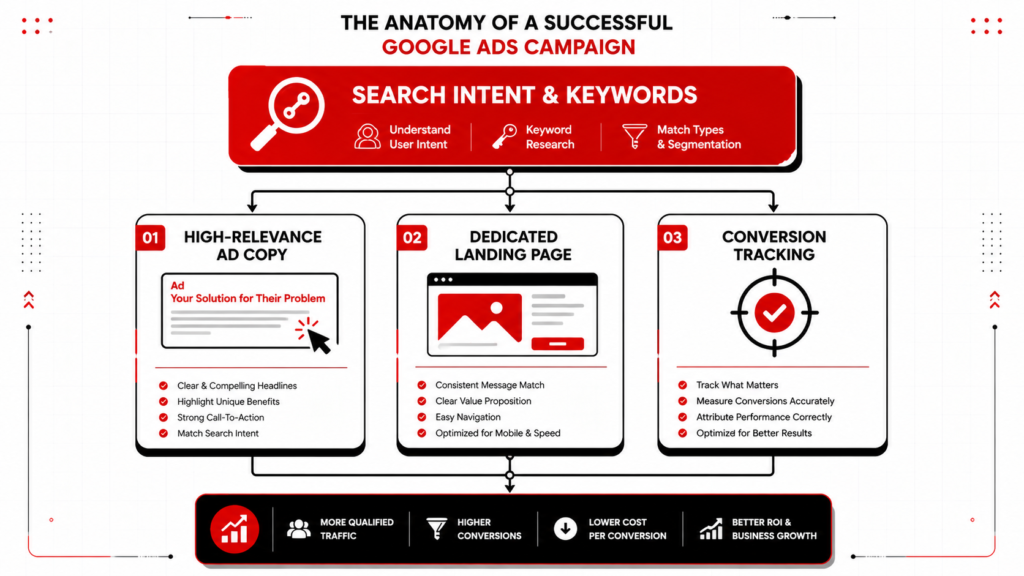
Google Ads can be a useful way for businesses to reach potential customers when they are actively searching for a product or service. But simply creating an advertisement and adding a budget does not guarantee results. A well planned campaign needs the right keywords, audience targeting, landing page, budget, ad message, and ongoing performance checks.
For businesses that are new to paid advertising, working with an experienced Google Ads consultant can help avoid common setup mistakes and create a campaign based on clear business goals.
What Is a Google Ads Strategy?
A Google Ads strategy is the plan behind your paid search campaigns. It covers what you want to achieve, who you want to reach, which searches you want to appear for, how much you are willing to spend, and how you will measure success.
For example, a local web design company may want more enquiry calls rather than simply more website traffic. Its campaign could focus on searches from people actively looking for website design services in its target location.
This approach is more useful than showing advertisements to a large audience without considering their intent.
Start With Clear Campaign Goals
Before creating a campaign, decide what success means for your business.
Your goal could be:
- Generate qualified leads
- Increase online sales
- Get more phone calls
- Promote a specific service
- Increase bookings
- Drive relevant website traffic
The goal affects almost every campaign decision, including bidding, ad copy, landing pages, and conversion tracking.
If your main objective is lead generation, for example, measuring form submissions and phone calls is more meaningful than focusing only on impressions.
Choose Keywords Based on Search Intent
Keyword selection is one of the most important parts of Google Ads.
Someone searching for “what is SEO” is probably looking for information. Someone searching for “SEO agency near me” may already be considering a service provider.
This difference is called search intent.
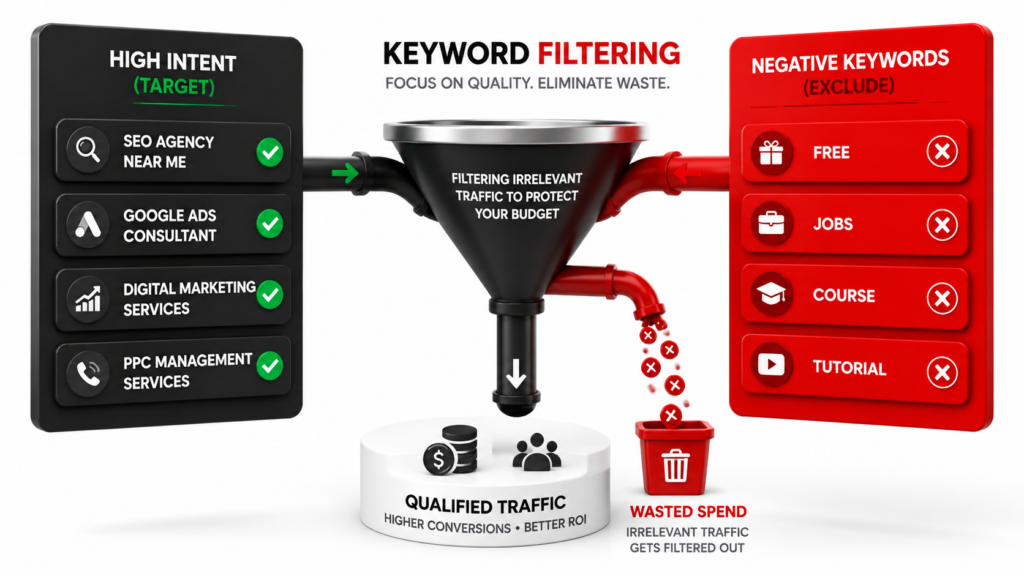
Businesses should prioritize keywords that have a reasonable connection with their products or services. Negative keywords are also important because they prevent advertisements from appearing for irrelevant searches.
For instance, a company selling professional services may want to exclude searches containing terms such as free, jobs, course, or tutorial if those searches do not match its offer.
Write Ads That Match Customer Needs
Effective ad copy should quickly explain what the business offers and why someone should consider it.
Instead of using vague claims, focus on specific benefits, relevant services, and a clear next step. The wording should also match the searcher’s expectations.
If someone searches for “local SEO services,” an advertisement that clearly mentions local SEO is more relevant than a general advertisement about digital marketing.
Relevance helps create a better connection between the keyword, advertisement, and landing page.
Build a Landing Page That Converts
Sending every visitor to the homepage is not always the best choice.
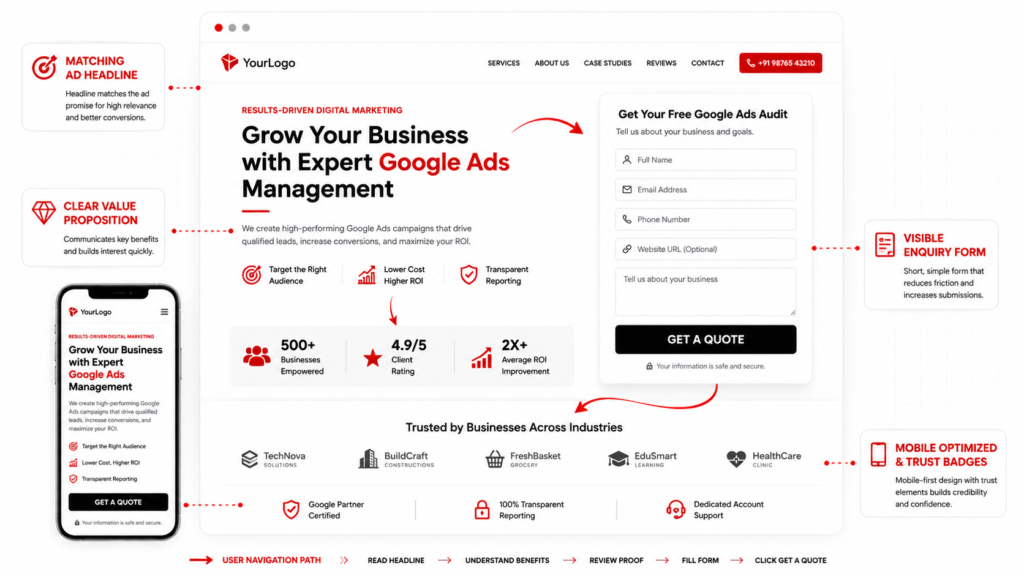
A dedicated landing page should continue the message from the advertisement. It should clearly explain the service, show relevant information, answer common questions, and make contacting the business simple.
Mobile usability is particularly important because many people interact with advertisements using smartphones.
A fast page with a clear offer and simple enquiry form can make a significant difference to campaign performance.
Google Ads Campaign Optimization
Google Ads campaign optimization is an ongoing process rather than a one time task.
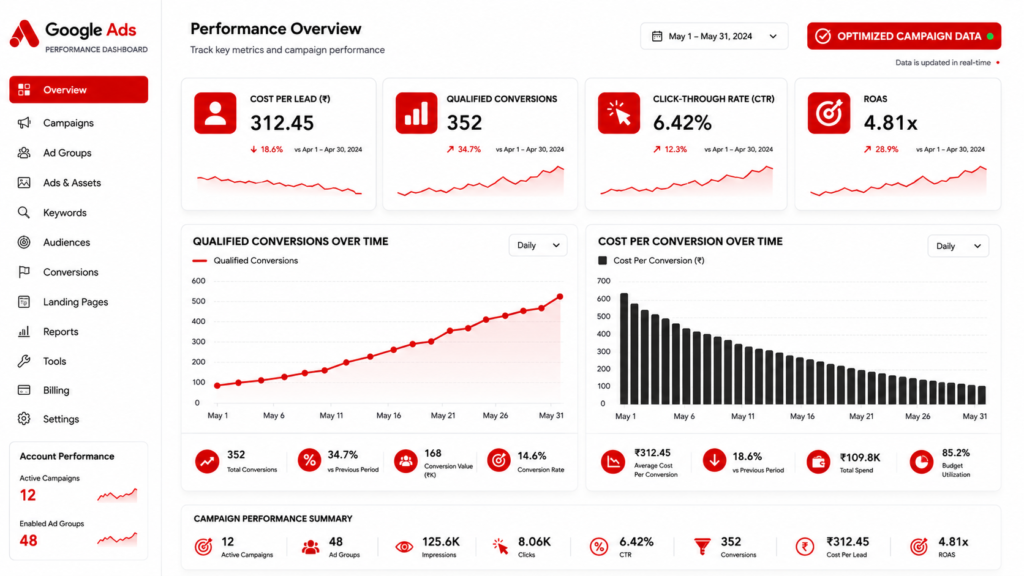
Review search terms, conversion data, keyword performance, click through rates, cost per conversion, and other relevant metrics regularly. Poor performing keywords may need adjustment, while strong keywords may deserve more attention.
However, avoid making major changes based on very small amounts of data. A campaign needs enough information to identify meaningful patterns.
Control Your Advertising Budget
A larger budget does not automatically create better results.
Start with a budget that your business can comfortably manage and monitor the cost of acquiring a customer or lead. If a campaign produces profitable results, increasing investment can make sense.
It is also important to consider the value of each conversion. A lead worth ₹5,000 to a business should be evaluated differently from a lead that could generate ₹50,000 in revenue.
When Should You Hire a Google Ads Consultant?
A consultant can be useful when your campaigns are spending money without producing enough conversions, when you are unsure about campaign structure, or when you want a professional review before increasing your advertising budget.
A reliable consultant should explain the strategy clearly, show how results will be measured, and set realistic expectations. Be cautious of anyone promising guaranteed sales or instant results because advertising performance depends on competition, offer quality, market demand, website experience, and many other factors
Another mistake is ignoring technical problems because the website looks fine. A website can look perfect in a browser while still having indexing or crawling issues.
It is also risky to make major URL changes without checking their SEO impact. Removing or changing important URLs without proper redirects can cause existing search visibility to drop.
Finally, avoid treating SEO as a one time project. Websites change constantly. New pages are published, old pages are edited, plugins are updated, and technical issues can appear.
Frequently Asked Questions
How much should I spend on Google Ads?
There is no universal budget. Your budget should consider keyword competition, customer value, location, conversion rates, and the amount you can comfortably invest.
How long does it take for Google Ads to work?
A campaign can start receiving clicks soon after launch, but understanding whether it is profitable requires enough conversion data and ongoing optimization.
Are Google Ads better than SEO?
They serve different purposes. Google Ads can provide paid visibility quickly, while SEO focuses on building organic visibility over time. Many businesses benefit from using both.
Why are my Google Ads getting clicks but no leads?
Possible reasons include poor keyword targeting, weak ad messaging, an unclear offer, an unsuitable landing page, or incorrect conversion tracking. Reviewing the complete customer journey is important.
Should I manage Google Ads myself?
Small campaigns can be managed internally, but professional guidance may be worthwhile when budgets are significant or campaign performance is difficult to understand.