
Branding in Social Media Marketing: Strategies to Build a Strong Brand
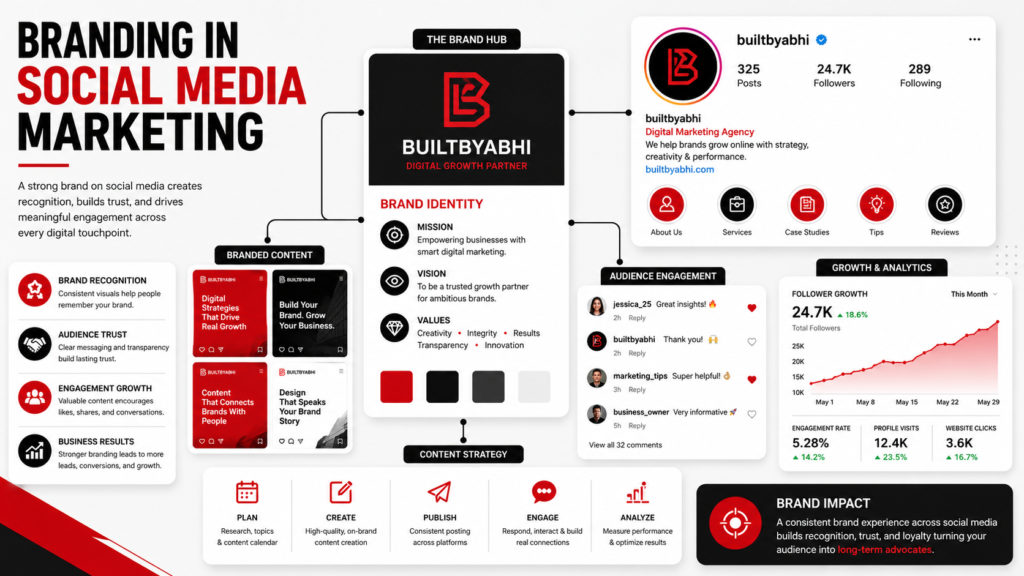
Learn how social media branding can strengthen your brand identity, build customer trust, and create a consistent presence across digital platforms.
Social media is not only a place for businesses to promote products or publish regular posts. It is also where people form opinions about a brand. The way a business communicates, designs its content, responds to customers, and presents its values can influence whether people remember and trust it.
This is why branding social media marketing has become an important part of a wider digital marketing strategy. Strong branding can help a business look more consistent, communicate its personality clearly, and build a connection with the right audience.
A successful social media presence does not always require thousands of followers. What matters more is whether people can recognize the brand, understand what it offers, and feel confident interacting with it.
What Is Branding in Social Media Marketing?
Branding in social media marketing means using social platforms to create and maintain a clear identity for a business. This includes visual elements such as colors, fonts, logos, images, and design styles, as well as the way a brand communicates with its audience.
For example, imagine a local clothing business that uses the same logo, color combination, photography style, and friendly communication across Instagram and Facebook. After seeing several posts, a customer may recognize the business even before reading its name.
That recognition is one of the main goals of social media marketing for branding.
Branding is not simply about making posts look attractive. It is about creating a consistent experience that tells people what the business represents.
Why Is Social Media Branding Important?
People see a large amount of content every day. A business that looks different on every platform can easily become difficult to remember.
Consistent branding solves part of this problem. When your profile design, content style, tone, and message remain connected, people can develop a clearer understanding of your business.
Strong social media branding can help with:
- Better brand recognition
- Stronger customer trust
- Clearer communication
- A more professional appearance
- Better audience connection
- Consistent brand identity
For example, a digital marketing agency might use educational posts to explain SEO, website design, and paid advertising. If the agency maintains a consistent visual style and explains complicated subjects in a simple way, its audience can gradually associate that style with the agency.
This kind of familiarity can be valuable when someone eventually needs marketing services.
Key Elements of a Strong Social Media Brand
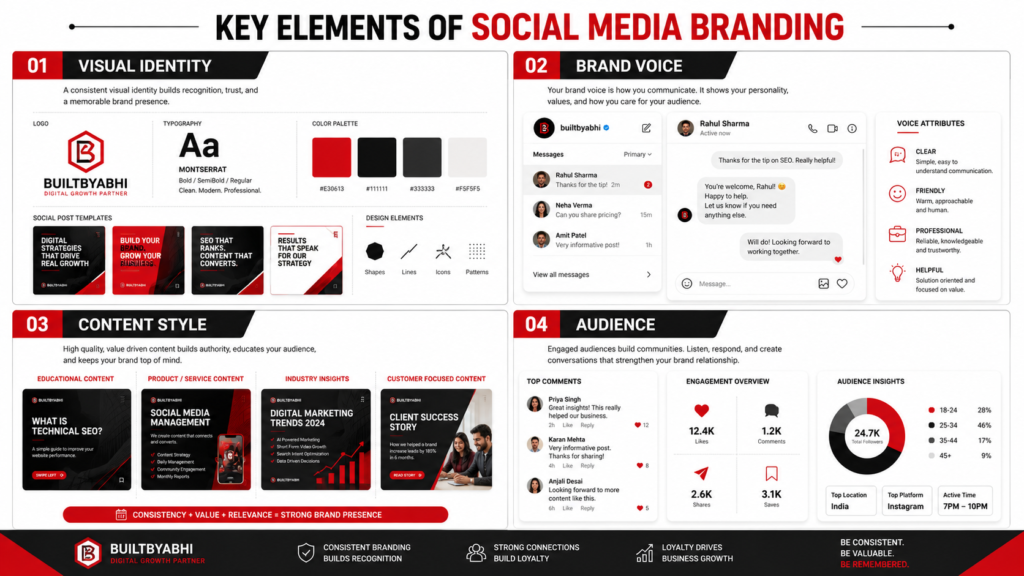
A successful brand is usually built through several connected elements rather than one design feature.
Visual Identity
Your visual identity includes your logo, colors, typography, photography style, graphics, and overall post design.
You do not need every post to look exactly the same. However, there should be enough consistency for people to understand that the content belongs to the same business.
For example, using a consistent color palette and typography across Instagram posts, stories, and advertisements can make the brand easier to recognize.
Brand Voice
Your brand voice describes how your business communicates.
A financial company may use a clear and professional tone, while a fashion brand may communicate in a more casual and creative way. Neither approach is automatically better. The important thing is choosing a style that matches your audience and maintaining it.
Avoid changing your personality completely from one post to another. Consistency helps customers know what to expect.
Content Style
Good branding also depends on the type of content you regularly publish.
A business can share educational information, product demonstrations, customer stories, behind the scenes content, industry insights, or useful tips.
The content should have a clear connection with the business. A social media manager should not create posts simply to fill the content calendar. Each post should have a reason for being published.
Audience Understanding
Branding becomes much easier when you understand the people you want to reach.
Consider what your audience needs, what questions they ask, what problems they face, and what type of communication they respond to.
For example, a website design company targeting small businesses may create simple posts explaining website speed, mobile usability, landing pages, and conversion problems. This is more useful than publishing random design quotes that have little connection with its services.
How to Build a Social Media Branding Strategy
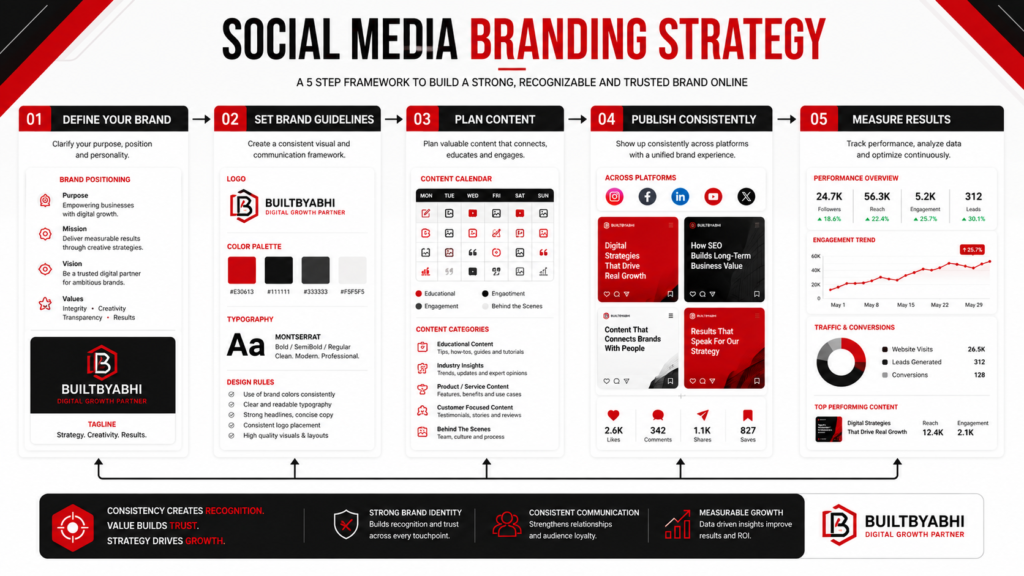
Start by defining what your brand should be known for. Keep this simple. It could be affordable products, expert advice, premium service, local knowledge, or a particular type of customer experience.
Next, create basic brand guidelines. Decide which colors, fonts, imagery, and communication style should be used across your social channels.
After that, plan your content around a few clear topics. For a digital marketing business, these could include SEO, social media management, web design, content marketing, and practical marketing advice.
Most importantly, review your content regularly. Look at which topics generate meaningful conversations, website visits, enquiries, or other useful actions. Do not judge your branding only by likes and follower numbers.
Common Social Media Branding Mistakes
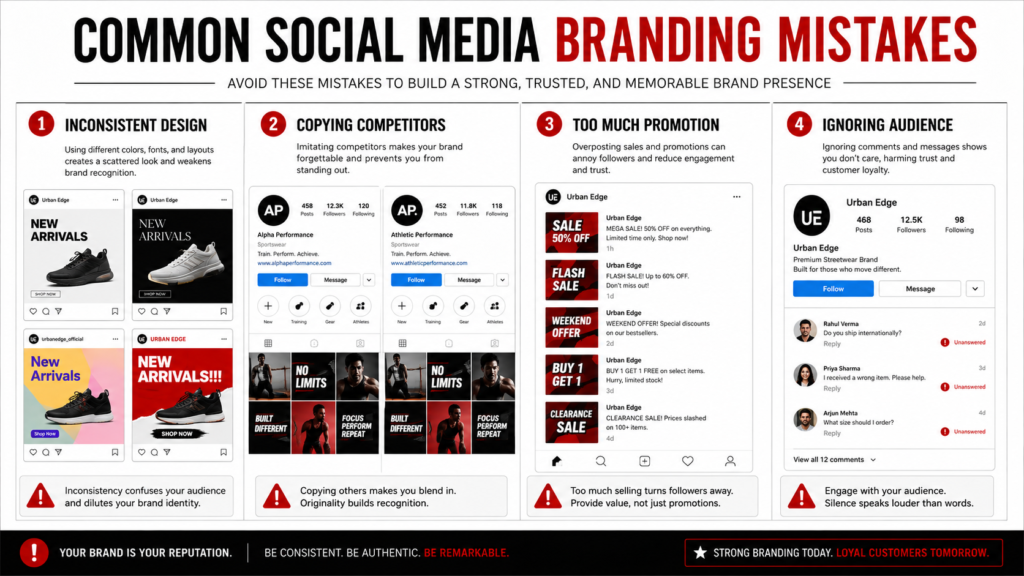
One common mistake is changing the visual style too often. Experimentation is useful, but constantly changing colors, fonts, and layouts can make a brand difficult to recognize.
Another mistake is copying competitors. Looking at other businesses can provide inspiration, but your brand should have its own personality and message.
Posting too much promotional content can also weaken audience interest. People generally want useful information, answers, and relevant content, not a sales message in every post.
Finally, do not ignore comments and messages. Branding also happens through conversations. A helpful and respectful response can create a better impression than a beautifully designed post.
Frequently Asked Questions
What is branding in social media marketing?
Branding in social media marketing is the process of creating a consistent business identity across social platforms through visuals, communication, content, and customer interactions.
Why is social media important for branding?
Social media gives businesses regular opportunities to communicate with their audience. Consistent content can improve recognition, trust, and familiarity over time.
What should a social media branding strategy include?
It should usually include a clear brand identity, visual guidelines, brand voice, content themes, audience research, publishing plans, and regular performance reviews.
Does social media branding help small businesses?
Yes. Small businesses can use consistent branding to look professional, become easier to recognize, and build stronger relationships with their target audience without needing a very large following.
Final Thoughts
Good branding does not happen because a business uses an attractive logo or publishes hundreds of social media posts. It develops through consistency, useful communication, clear positioning, and repeated positive experiences.
A practical branding social media marketing strategy should make it easy for people to recognize your business and understand what makes it different. Focus on your audience, keep your message consistent, and create content that provides genuine value.
Over time, these small and consistent efforts can help turn social media from a simple publishing channel into an important part of your overall brand identity.