
Technical SEO vs On Page SEO: What’s the Difference?
Discover the key differences between technical SEO and on page SEO, what each includes, why both matter, and how to use them together to improve your website’s Google rankings.
Introduction
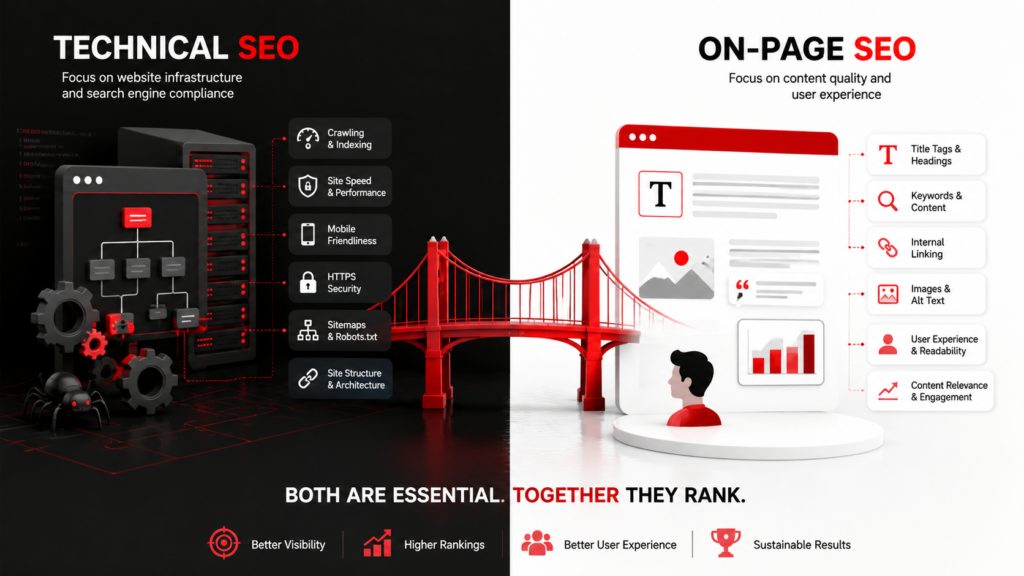
When people start learning SEO, they often hear about technical SEO and on page SEO. The two sound similar, but they deal with different parts of a website. The simplest way to understand it is this: technical SEO focuses on how well a website can be crawled, understood, and indexed by search engines. On page SEO focuses mainly on the content and elements of individual pages. Consider a digital marketing agency that publishes a detailed guide about social media marketing. The article may contain useful information and target the right search terms. However, if search engines cannot properly access or index the page, that content may not get the visibility it deserves. The opposite can also happen. A website can have a clean technical setup but poor content that does not answer what people are searching for. That is why understanding technical SEO vs on page SEO is useful for SEO professionals, digital marketers, website owners, and web designers.
What Is Technical SEO?
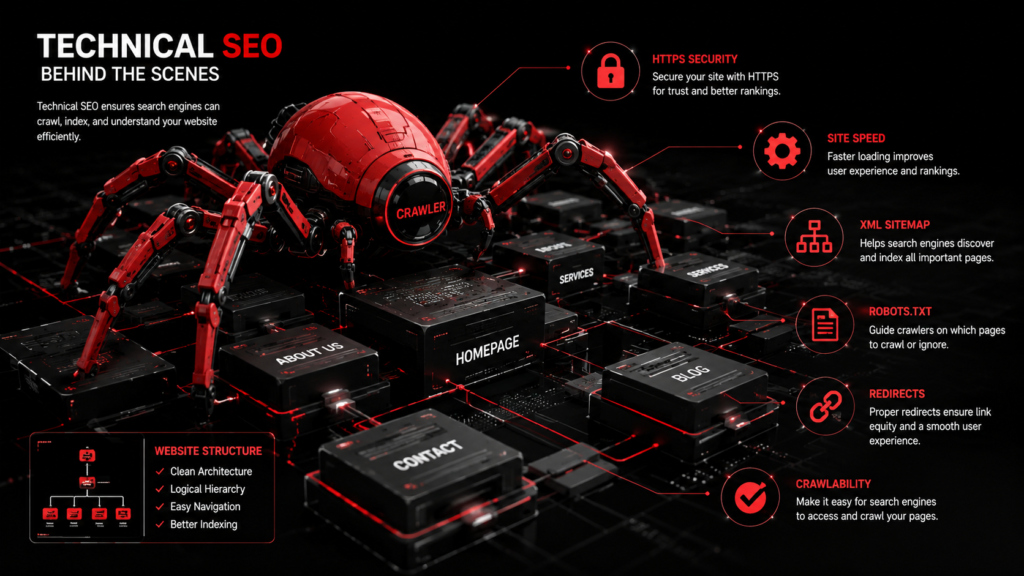
Technical SEO involves improving the technical parts of a website so search engines can discover, crawl, and index its pages efficiently. It usually works behind the scenes. Visitors may not notice many of these improvements directly, but they can make a significant difference to how a website functions.Technical SEO commonly includes:
- Website loading performance
- Mobile usability
- XML sitemaps
- Robots.txt
- HTTPS security
- URL structure
- Canonical tags
- Redirects
- Broken links
- Crawlability and indexability
For example, imagine a web design agency launches a new website with twenty service pages. The pages look great, but a technical configuration accidentally prevents search engines from indexing several important URLs. From a visitor’s perspective, the website may appear completely normal. From an SEO perspective, there is a serious problem. This is where technical SEO optimization becomes important. Tools such as Google Search Console can help website owners identify indexing issues, page experience problems, and other technical concerns.
What Is On Page SEO?
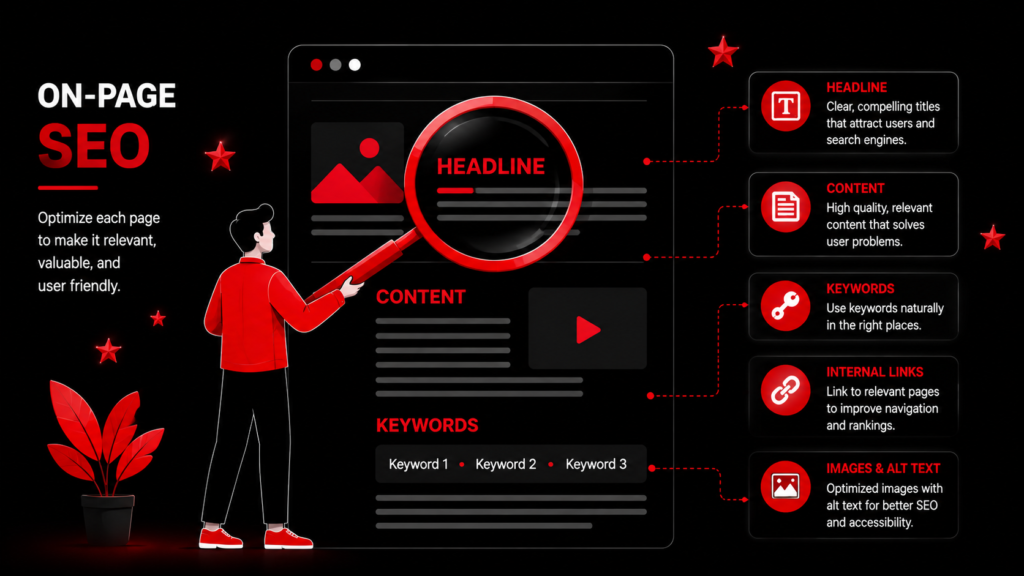
On page SEO deals with the content and page elements that visitors and search engines can see and understand. The main goal is to make a page relevant, useful, clear, and closely aligned with the searcher’s intent. Important areas include:
- Page titles
- Headings
- Meta descriptions
- Relevant keywords
- Helpful content
- Internal links
- Image alt text
- URLs
- Content structure
- Search intent
For instance, suppose a company creates a page about SEO services. Simply mentioning the phrase SEO services many times will not make the page useful. A better page would explain what the service includes, who needs it, how the process works, what problems it can solve, and what a potential customer should consider before hiring an SEO provider. That is the purpose of on page SEO optimization. It is about improving the page for both users and search engines rather than simply inserting keywords
Technical SEO vs On Page SEO: Key Differences
The easiest way to understand the difference is to look at what each area controls.
Technical SEO | On Page SEO |
Website structure | Page content |
Crawling | Content relevance |
Indexing | Keyword targeting |
Site performance | Headings |
Mobile usability | Internal linking |
XML sitemap | Image optimization |
HTTPS | Search intent |
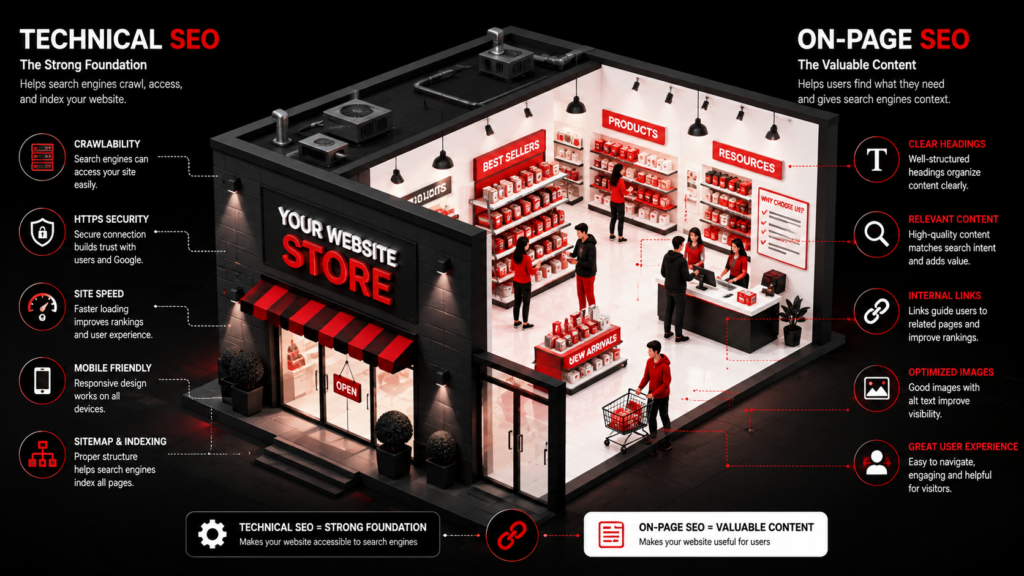
Think of a website like a physical store.Technical SEO is similar to making sure the building has working doors, clear paths, proper lighting, and an organized layout.On page SEO is similar to arranging the products, adding clear labels, and giving customers enough information to make a decision.Both are important, but they solve different problems.
Why Technical SEO Matters
A strong technical foundation gives search engines a better chance of accessing and processing your website.For example, slow pages can create a frustrating experience for visitors. Broken links can prevent users from reaching useful information. Incorrect indexing settings can stop important pages from appearing in search results. Technical SEO also becomes more important as a website grows. A small website with ten pages may be easy to manage manually. A large website with thousands of pages needs a more organized approach to crawling, indexing, redirects, and site architecture. This is why technical checks should be part of regular SEO maintenance rather than something done only once.
Why On Page SEO Matters
Even if Google can crawl your website perfectly, the content still needs to be useful and relevant. On page SEO helps communicate the purpose of a page. Clear headings make content easier to scan. Descriptive titles tell users what they can expect. Internal links help visitors discover related information. Search intent is particularly important. If someone searches for “social media marketing strategy,” they are likely looking for information, examples, or a practical strategy. A page that immediately tries to sell a service without answering the underlying question may not satisfy that intent. Good on page SEO starts with understanding what the searcher actually wants.
How to Use Both Together
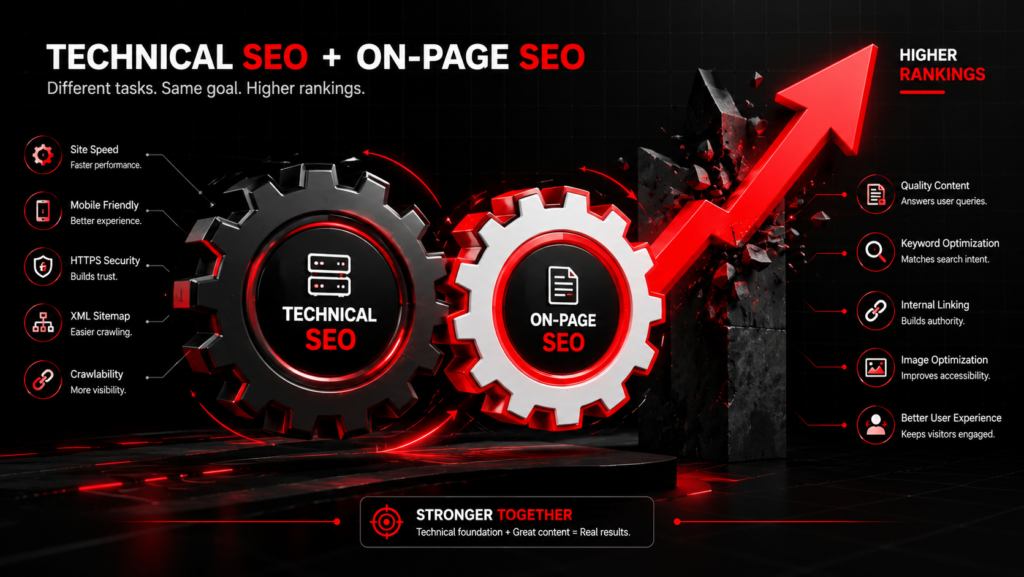
The best approach is not to choose between technical SEO and on page SEO. Use both.
Start by checking whether important pages can be crawled and indexed. Then look at website speed, mobile usability, redirects, broken links, and other technical areas. After the technical foundation is healthy, review the actual pages.
Ask yourself:
Does the page clearly answer the main question?
Is the content easy to read?
Are the headings logical?
Does the page match search intent?
Are relevant pages connected through internal links?
Does the content provide useful information instead of repeating the same keyword?
This simple process can reveal problems that are easy to miss when you only focus on rankings.
A Practical Example
Imagine a local digital marketing company wants to rank for SEO services.
First, the company checks its technical setup. The service page is indexable, works properly on mobile, loads efficiently, and has no major crawling issues.
Next, the company improves the page content. It explains the SEO process, discusses common SEO problems, answers customer questions, and links to useful resources about keyword research and content strategy.
The result is a page that is technically accessible and genuinely useful.
That combination is much stronger than focusing on only one side of SEO.
Common Mistakes to Avoid
One common mistake is thinking that SEO is simply about adding keywords. Keywords help search engines understand topics, but excessive repetition can make content uncomfortable to read.
Another mistake is ignoring technical problems because the website looks fine. A website can look perfect in a browser while still having indexing or crawling issues.
It is also risky to make major URL changes without checking their SEO impact. Removing or changing important URLs without proper redirects can cause existing search visibility to drop.
Finally, avoid treating SEO as a one time project. Websites change constantly. New pages are published, old pages are edited, plugins are updated, and technical issues can appear.
Add Your Heading Text Here
The difference between technical SEO vs on page SEO is easier to understand when you think about their roles.
Technical SEO helps create a website that search engines can access, crawl, and index properly. On page SEO helps make individual pages useful, relevant, understandable, and aligned with what people are searching for.
Neither replaces the other.
For a website in digital marketing, social media marketing, web design, or any other industry, a balanced SEO strategy should address both areas. Start with the technical foundation, improve your content, monitor performance, and make changes based on real user needs and search behavior.
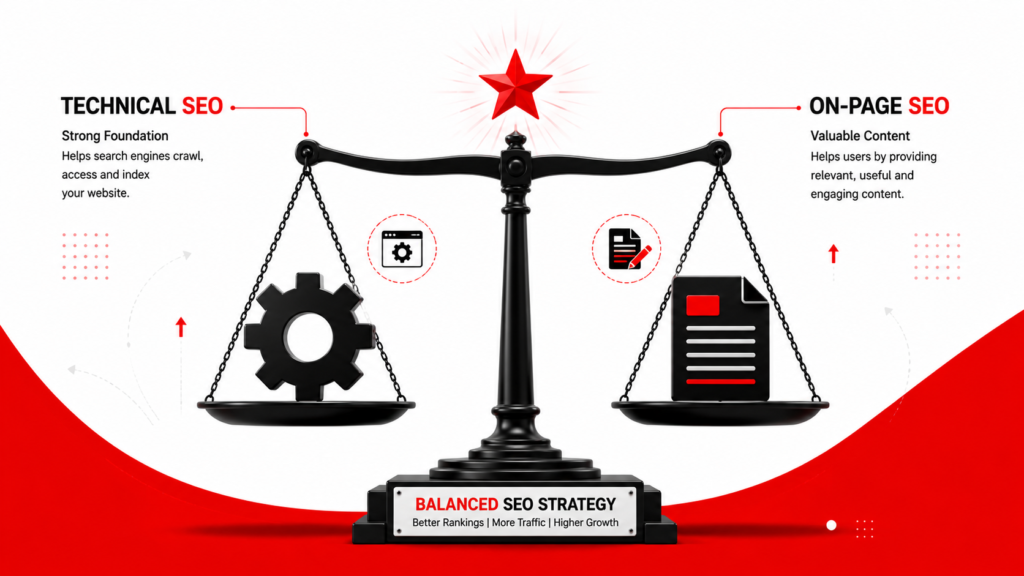
With consistent technical SEO optimization and thoughtful on page SEO optimization, you can build a website that is easier for search engines to understand and more useful for the people who visit it.